

The overwhelm and demanding pace of modern life, emotional distress, and relationship struggles—challenges that almost every person faces daily—must be released in some way for us to continue functioning.
If we do not learn emotional self-regulation, how to express our needs, set boundaries, and find the wisdom of conscious choice that leads to the harmonization of body, mind, and soul, we will unconsciously seek out compensation.
Common coping mechanisms
One of the most common compensation is emotional overeating.
Of course, there are other forms—such as alcohol, cigarettes, drugs, excessive exercise, sex, or workaholism—but food remains a primary outlet. When we are overwhelmed by stress and lack the tools to regulate our emotions, we unconsciously seek a way to compensate and find temporary relief.
Humans are incredibly resourceful at finding ways to silence their inner voice. We run from ourselves and deny our emotional state. The solution lies in self-awareness and consciously changing our patterns of behavior.
What is emotional eating?
Unfortunately, we don’t always eat just to satisfy physical hunger or to provide the body with the fuel and nutrients it needs to function. For many, food is a comfort—a way to dampen the stress response, reward themselves, and induce a fleeting sense of relaxation and pleasure after a hard day or when intense emotions arise. So, to simplify, it means using food to avoid facing our emotional experiences.
Eating to feel better, fill an emotional void, or ease loneliness and tension rarely brings the desired results. After an episode of emotional eating—which usually involves “junk food” (processed, fatty, salty, or sugary items like snacks, pizza, ice cream, cookies, and chocolate)—we often feel even worse. While we might feel a brief “chemical” relief due to the release of feel-good hormones like dopamine, endorphins, and serotonin, the underlying distress remains unresolved, and is often replaced by a heavy sense of guilt.
Am I an emotional eater?
- I eat whenever my energy levels drop.
- I eat more when I am stressed.
- While eating, I’m already thinking about what else I can eat.
- I’m often unaware of why I am eating.
- I eat to feel better (when sad, worried, angry, anxious, bored, or lonely).
- I eat even when I’m not hungry.
- I have intense cravings for specific foods.
- I use food as a reward.
- I eat past the point of fullness, even when I’m stuffed.
- Food is my primary source of pleasure or my “best friend.”
- I feel powerless or out of control around food.
- I don’t have regular meals and reach for “comfort food” the moment I feel hungry.
The Cycle
Occasionally enjoying less healthy food or eating a bit too much during a celebration doesn’t make you an emotional eater. However, if this pattern is frequent and you feel a dependency on specific “comfort foods” (it’s rarely unprocessed foods—no one is addicted to broccoli or apples), then you are likely caught in a cycle.
The cycle usually looks like this: Stress or agitation — Overwhelming urge to eat immediately — Eating more than needed (usually unhealthy food) — Feeling guilty and powerless.
This is emotional hunger, which leads to dissatisfaction rooted in an inability to regulate emotions and a sense of helplessness regarding food.
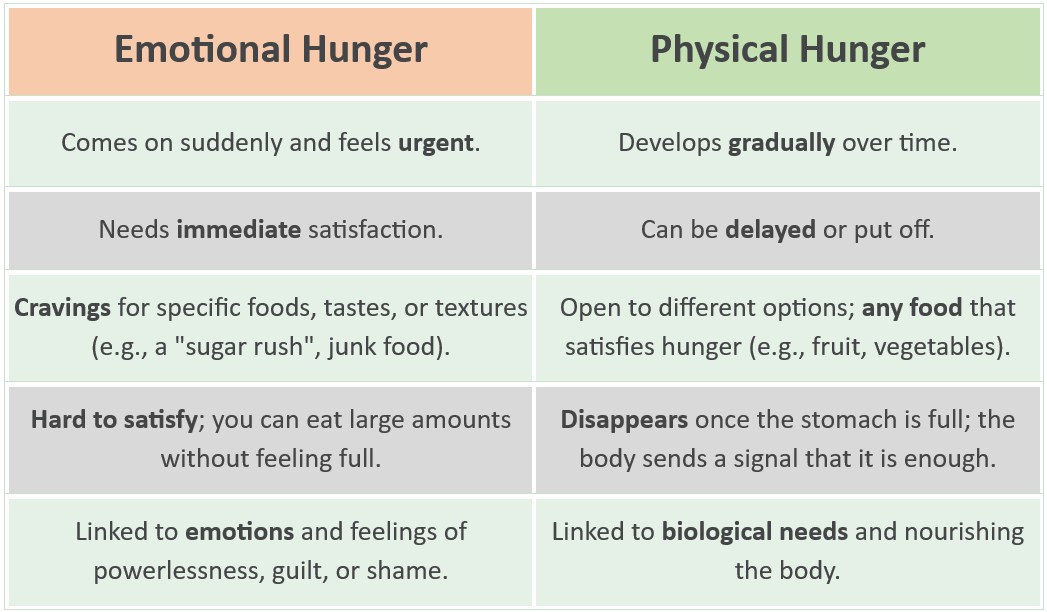
Emotional vs. Physical Hunger
Emotional hunger can be incredibly powerful and is often mistaken for physical hunger. However, there are clear indicators that can help you analyze your habits and identify what kind of eater you are.
Identify your triggers
The first step is awareness and self-observation. In which situations, relationships, or places do you reach for comfort food? These aren’t always unpleasant situations; sometimes we use food to reward ourselves or celebrate. Even then, it serves as a “compensation” for emotional regulation. We use food to achieve a state of numbness, feeling nothing but the temporary physical pleasure caused by the body’s chemical response to certain addictive foods (sugar, cheese, bread, pastries, chocolate, ice cream, etc.).
Most common reasons for emotional eating:
- Unpleasant emotional states: Anger, sadness, fear, anxiety, loneliness, shame, guilt, resentment, helplessness, or disappointment.
- Boredom: A sense of dissatisfaction, lack of fulfillment, or an uncomfortable “emptiness.”
- Childhood habits: Being rewarded with sweets or pizza for “good behavior,” or being given food to calm down or as a primary expression of love.
- Social influences: Overeating in social settings that encourage unhealthy habits or eating to ease the discomfort of social interaction.
- Stress.
Solutions for overcoming emotional eating
Emotional eating can be transformed into a healthy relationship with food. While many can make progress on their own, sometimes professional help is needed to resolve the underlying traumas linked to these behaviors.
Useful strategies include:
- Emotional journaling: Identifying the links between specific emotions and food.
- The “Wait” technique: Drinking a glass of water and waiting 5 minutes.
- Emotional self-regulation: Breathing techniques, “body shaking,” or grounding exercises.
- Self-care: Quality nutrition, exercise, sleep, and relaxation.
- Mindful eating: Eating slowly, in peace, without screens or distractions.
- Clearing your environment: Removing “trigger foods” from the home and shopping only with a list.
Ready to Reclaim Your Power?
Reclaiming your life from old patterns is the first step toward a healthier, more vibrant you. No matter how long you’ve been in this cycle, freedom is possible—and it can start today. Give yourself permission to let go of the struggle and embrace a life of balance.
Every person’s story is unique. Even if symptoms are similar, it is often best to consult experts who take a holistic approach.
You don’t have to do it alone. With my supportive mentoring program, you’ll receive a personalized, holistic roadmap designed to help you overcome emotional eating and reclaim your power. Your new adventure starts here.
BOOK GUIDANCE CALL to see that I am the right support for you!
Thank you for taking care of yourself!